April 20, 2026

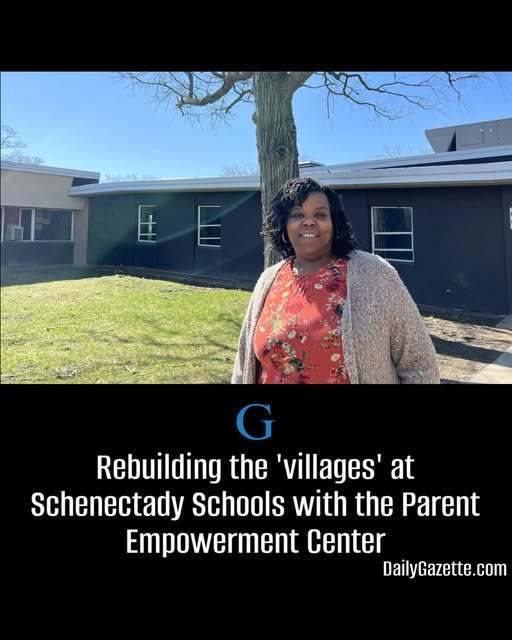
The PEC is based at the Schenectady High School, but is a resource for the entire district. Ms. Shanda stepped into the role three years ago after a career at community front-line organizations, including the Schenectady Community Action Program and Northern Rivers. The PEC, however, is where she plans to stay.
With boxes stacked along the walls and the power out as folks repaired the high school’s roof, Ms. Shanda said the PEC, and other Innovation, Equity & Engagement team professionals throughout the district, are turning their focus to prevention as they prepare for the open house April 16.
A lot of the advertising the PEC is doing is getting the word out about what is available to families and parents, Ms. Shanda said. They have resources for everything from food insecurity to rent payments to diapers to prom dresses. She has a National Grid advocate “on speed dial” to help folks set up payment plans if they need them.
There’s also the pop-up pantries they are trying to establish once a month at every school and at events that Ms. Shanda helps organize. Whether it’s the Village Holiday Meals or the Hamilton Hill summer reunions or monthly coupon class, it’s a gathering spot for the community.
The day-to-day in the PEC is a mix of those pieces, she said, as well bringing families or parents in to facilitate conversations and discuss potential or ongoing problems with their student. It’s not about the negatives in people's lives all the time, Ms. Shanda said, which is a very purposeful element of what they provide.
She has a snack table set up in the entrance to her room. Students know they can swing by and grab something if they're hungry, and through creating relationships with the students, she will hear about a food-insecurity issue or a struggle that the student and their family is going through.
Those interactions can allow her to bring in or reach out to a parent and get them connected to what the PEC and the district can offer. They want to be able to catch the brewing issue, if someone is laid off, for example, rather than try to fix it when they are stuck with six months of late rent.
At the same time, the students know Ms. Shanda will not let them off the hook if problems are arising. If they start repeatedly skipping class, they are still welcome to an apple or a bottle of water, but none of the other snacks.
The students will come to Ms. Shandas’ office to tell her to check their attendance records. And that’s followed by a call to their parents to let them know the success marks their child is or isn't hitting.
“Parents wouldn’t answer the phone because you get nothing but negativity…But I’ve started establishing these relationships with parents that haven’t had to come in here,” she said, adding that they want to make sure parents know about their student’s efforts. “The small wins are very important.”
When it comes to addressing issues, Ms. Shanda said they want it to be an invitation more than a demand. If two kids have a conflict, they bring in both families, mediate while letting them discuss and then bring the students in. Then, the families are on the same page about what needs to happen.
The center helps set the students up for long-term success, she said, whether that means for the rest of the school year, when they graduate or beyond. She would much rather have a parent come to the PEC angry than not come at all, because she knows that’s a parent who wants to work on a plan to move forward.
The district gets a lot of unnecessary flack, Ms. Shanda said. When things are bad, they’re bad, but there is so much good happening too, she said. Though the PEC room and Ms. Shanda are stationed in the high school, the parent liaisons in every school. She and the district are trying to establish a Parent Empowerment Group to get folks more involved.
They don’t necessarily need a PEC in every school, she said. Rather, she and her colleagues are in favor of moving all the schools to community schools, a direction they feel the district is already turning.
The distinction makes the schools a hub where students and the community are able to get services they need. They’re also open to whomever needs them and have community engagement worked into their curriculum. Dr. Martin Luther King Jr., William C. Keane, Hamilton Elementary School, Paige and Van Corlaer elementary schools are already community schools.
“My supervisor summed it up to me the best and I feel like I should use this, like I should hashtag it: ‘IEE is human services working in an educational institution,’” Ms. Shanda said.
“...I feel like they’re rebuilding the villages, you know what I mean? And making community resources accessible to our families who don’t really know about the things that we have in our community.”